


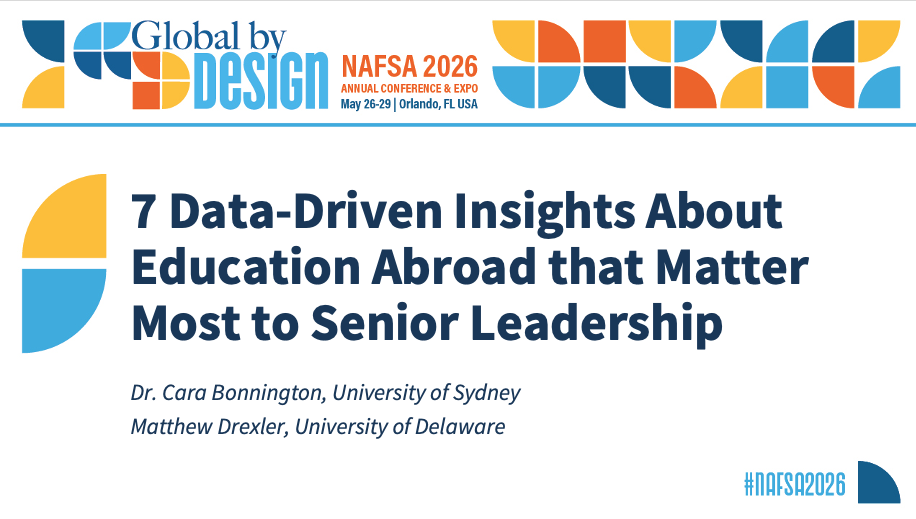
At NAFSA 2026 in Orlando, Dr. Cara Bonnington (University of Sydney) and Matthew Drexler (University of Delaware) presented a session exploring what senior leaders need to know about education abroad in a rapidly changing higher education environment.
Drawing on data from the global miXabroad benchmark, the session challenged a common assumption: that education abroad sits on the periphery of institutional priorities. Instead, the findings suggest that international experiences contribute directly to many of the issues currently occupying the minds of university leaders – from student recruitment and retention, to employability, wellbeing, institutional reputation, and long-term resilience.
Below are seven insights that resonated strongly with attendees.
1. The strongest outcomes are human-centred
For years, institutions have focused on employability as a key outcome of international experiences. While career readiness remains important, the data suggests that the strongest and most consistent impacts are often human-centred.
Students report significant gains in areas such as personal growth, resilience, intercultural understanding, communication, adaptability, and confidence.
This matters because universities increasingly describe these capabilities as essential for graduates navigating a future shaped by artificial intelligence, automation, and uncertainty. Education abroad is not simply supporting academic learning; it is helping develop the distinctly human capabilities that will remain valuable regardless of technological change.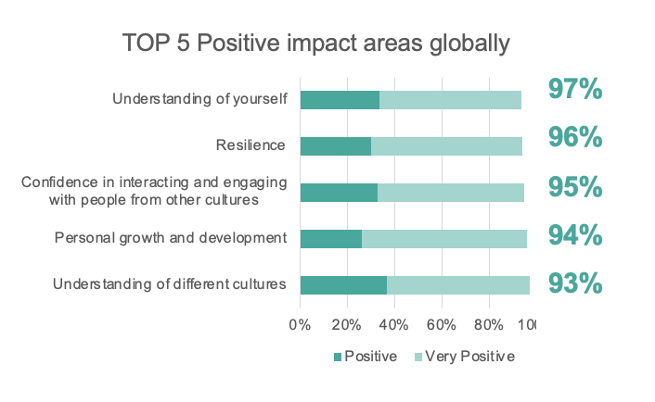
2. Students decide earlier than we think
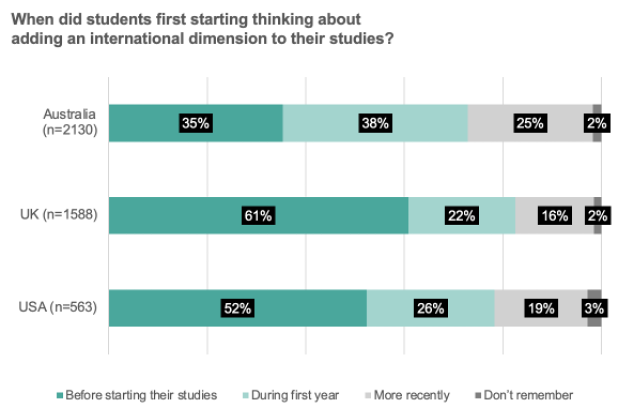
One of the most striking findings from the benchmark is how early students begin considering international opportunities.
Nearly half of students globally report first thinking about international experiences before they even commence university.
For senior leaders, this reframes education abroad as more than a student mobility initiative. It becomes a recruitment and retention strategy. Institutions that effectively communicate global opportunities during recruitment and first-year engagement may hold a competitive advantage over those that introduce these experiences later in the student journey.
3. Satisfaction drives advocacy
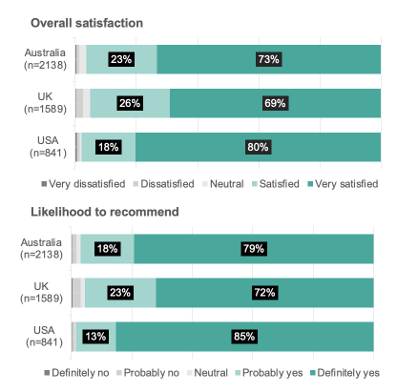
Students who have positive international experiences do more than complete a program; they become advocates.
The benchmark consistently shows a strong relationship between satisfaction and a student's willingness to recommend both their institution and international experiences to others.
This advocacy matters. It influences future participation, strengthens institutional reputation, supports alumni engagement, and contributes to the wider social licence of international education. In many ways, students who have studied abroad are among the sector's most credible ambassadors.
4. Education abroad supports institutional strategy
International experiences are often viewed as a specialist activity managed by a dedicated team. The data suggests a much broader contribution.
Education abroad directly supports priorities commonly found in institutional strategic plans, including student experience, graduate capability frameworks, global engagement objectives, employability, and institutional differentiation.
For leaders seeking evidence of impact, the question may no longer be whether education abroad aligns with institutional strategy, but how effectively institutions are measuring and communicating that contribution.

5. Safety and support shape outcomes
Student wellbeing and duty of care remain critical priorities for universities.
The benchmark highlights a strong connection between student perceptions of safety, preparation, support, and their overall satisfaction with an international experience.
This finding reinforces the importance of investing in pre-departure preparation, risk management, student support systems, and ongoing communication. When students feel safe and supported, they are more likely to report positive outcomes and recommend participation to others.
6. Flexible programs can still deliver strong impact
As institutions seek to widen participation, flexible program models are becoming increasingly important.
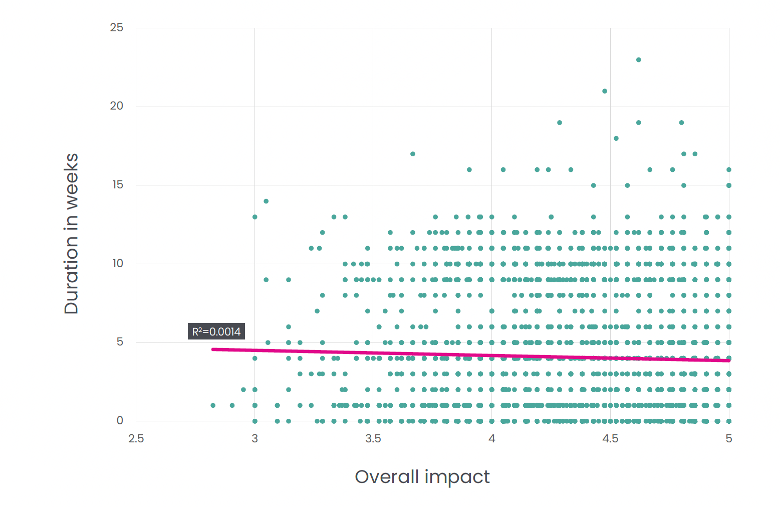
The data shows that short-term and non-traditional international experiences continue to generate high levels of satisfaction and meaningful outcomes. This is particularly important for students who may face financial, family, employment, or academic barriers to participating in longer-term mobility programs.
For institutions looking to expand access and improve equity, flexible models should not be viewed as a compromise. They can be a powerful tool for increasing participation while still delivering significant impact.
7. Education abroad strengthens institutional resilience
Taken together, these findings point to a broader conclusion.
Institutions that embed global learning across recruitment, student experience, wellbeing, employability, and graduate outcomes are often better positioned to respond to changing student expectations and an increasingly uncertain operating environment.
Education abroad contributes to institutional adaptability, differentiation, and relevance. It is not simply an optional enhancement to the student experience. It is part of how universities prepare students for a changing future.
Moving from Anecdote to Evidence
One of the recurring themes throughout the session was the need to move beyond stories alone.
Stories remain powerful, but senior leaders increasingly require evidence to inform decisions, allocate resources, and demonstrate value. Comparative benchmarking allows institutions to understand not only whether their programs are working, but how they compare with peers nationally and globally.
As the higher education sector continues to navigate financial pressures, changing student expectations, technological disruption, and increasing scrutiny of outcomes, the ability to demonstrate the impact of education abroad will become increasingly important.
The evidence is clear: education abroad is not simply a "nice to have." It contributes to many of the outcomes universities say matter most.
About the Presenters
Dr. Cara Bonnington is Director of Global Learning at the University of Sydney
Matthew Drexler is Director Study Abroad at the University of Delaware
The session, 7 Data-Driven Insights About Education Abroad That Matter Most to Senior Leadership, was presented at NAFSA 2026 in Orlando, Florida, drawing on findings from the global miXabroad benchmark.